

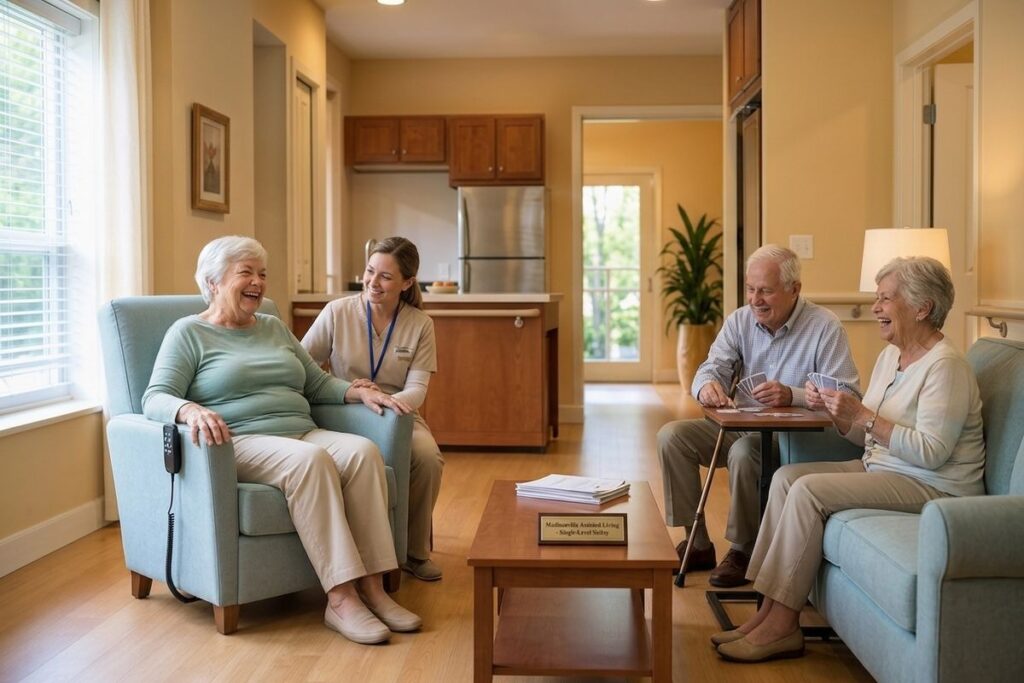
Key Takeaways
- Single-level senior living removes stairs and other unnecessary barriers from daily routines.
- Accessible features can make it easier for older adults to move around with walkers, wheelchairs, and other mobility aids.
- Thoughtful layouts keep dining, activities, and other shared spaces within easier reach.
- Personal care provides added support with medications, personal needs, and household tasks.
- Families can evaluate accessibility by paying close attention to the layout and features during a community tour.
Accessible Design for Senior Safety in Madisonville
Changes in mobility can make once-simple parts of the home harder to manage. Stairs, narrow pathways, difficult bathrooms, and long distances between rooms may create challenges for an older adult who uses a walker or wheelchair. Families searching for senior living often need to consider not only how much support a loved one needs, but also how easily they can move through their surroundings.
A single-level layout removes some of those everyday obstacles. At Oak Ridge Senior Living, accessible design complements personal care by creating an environment where residents can move between their apartments, dining areas, and shared spaces without navigating stairs. For families comparing Madisonville assisted living options, these practical details can play an important role in finding the right setting.
Why Single-Level Design Matters in Personal Care
An accessible environment should support the way residents actually move through their day. A single-story layout keeps essential spaces on the same level, which can reduce unnecessary physical demands for people with changing mobility.
Fewer Barriers Between Everyday Spaces
Removing stairs simplifies movement between different parts of the community. Residents don’t need to plan their day around staircases or other changes in elevation when heading to meals, activities, or shared spaces. A straightforward layout can be particularly useful for someone whose strength, balance, or stamina has changed.
Easier Movement With Mobility Aids
Walkers and wheelchairs require enough room to turn, pass through doorways, and travel comfortably through hallways. Single-level living eliminates the added challenge of moving between floors. Residents can continue using the aids that work for them as they go about their normal routines.
Convenient Access to Shared Areas
Dining rooms and activity spaces are more useful when residents can reach them without complicated routes. Keeping common destinations on one level can make spontaneous participation easier, whether someone wants to join an activity or meet a friend for a meal. Accessibility becomes part of everyday community life rather than a feature residents have to think about constantly.
More Confidence With Everyday Movement
A predictable environment can help residents become familiar with the routes they use most often. Knowing how to get from an apartment to meals, activities, and other destinations can make daily movement feel more manageable. For families, seeing a loved one become comfortable with their surroundings can also provide reassurance about the transition to personal care.
Accessible Features That Support Daily Routines
Single-level design provides the foundation for accessibility, but the security details throughout a community also affect how comfortably residents can move through their day. Families should consider how the full environment works for a loved one who uses a walker, wheelchair, or other mobility aid.
Accessible features to look for include:
- Wide hallways and doorways that leave enough room for mobility aids
- Bathrooms with grab bars, accessible showers, and space for assistance when needed
- Level pathways between apartments, dining areas, and other frequently used spaces
- Common areas with clear walking paths and comfortable, easy-to-reach seating
- Floor plans that limit unnecessary distance between important destinations
- Open spaces that give residents enough room to turn and maneuver safely
These features work best as part of a cohesive layout. A community that keeps everyday destinations accessible can make routine trips to meals, activities, and shared spaces easier to manage.

How Personal Care Adds Another Layer of Support
Accessible design addresses the physical environment, while personal care helps residents with tasks that have become difficult to manage alone. The two work together to support daily routines without taking over the things a resident can still do independently.
Help With Personal Routines
Team members can assist with tasks such as bathing, dressing, grooming, and other personal needs. Support can be adapted around the areas where a resident needs help rather than assuming everyone requires the same level of assistance. This allows residents to remain involved in their routines while receiving practical help when needed.
Medication Support
Keeping track of medications can become more complicated over time, especially when a schedule includes several prescriptions. Medication management provides structure around this part of the day and helps residents follow their established routines. Families can ask during a tour how medication support works and what level of assistance is available.
Household Support
Housekeeping and laundry can require considerable energy for someone experiencing mobility changes. Personal care communities can take these chores off a resident’s regular to-do list. That leaves more time and energy for meals, activities, visits, and the parts of the day residents would rather prioritize.
Explore Accessible Personal Care at Oak Ridge Senior Living
The physical layout of a senior living community affects much more than how it looks. Single-level design, accessible bathrooms, open pathways, and easy-to-reach common spaces can make everyday routines simpler for older adults with changing mobility. When those features are paired with personal care, residents can receive support while continuing to take an active role in their day.
At Oak Ridge Senior Living, families can consider both the environment and available support when deciding what their loved one needs next. Seeing the community firsthand is one of the clearest ways to determine how its layout could work with your loved one’s routines and mobility needs. Book a tour of Oak Ridge Senior Living today to learn more about accessible personal care in Madisonville.